Sub navigation

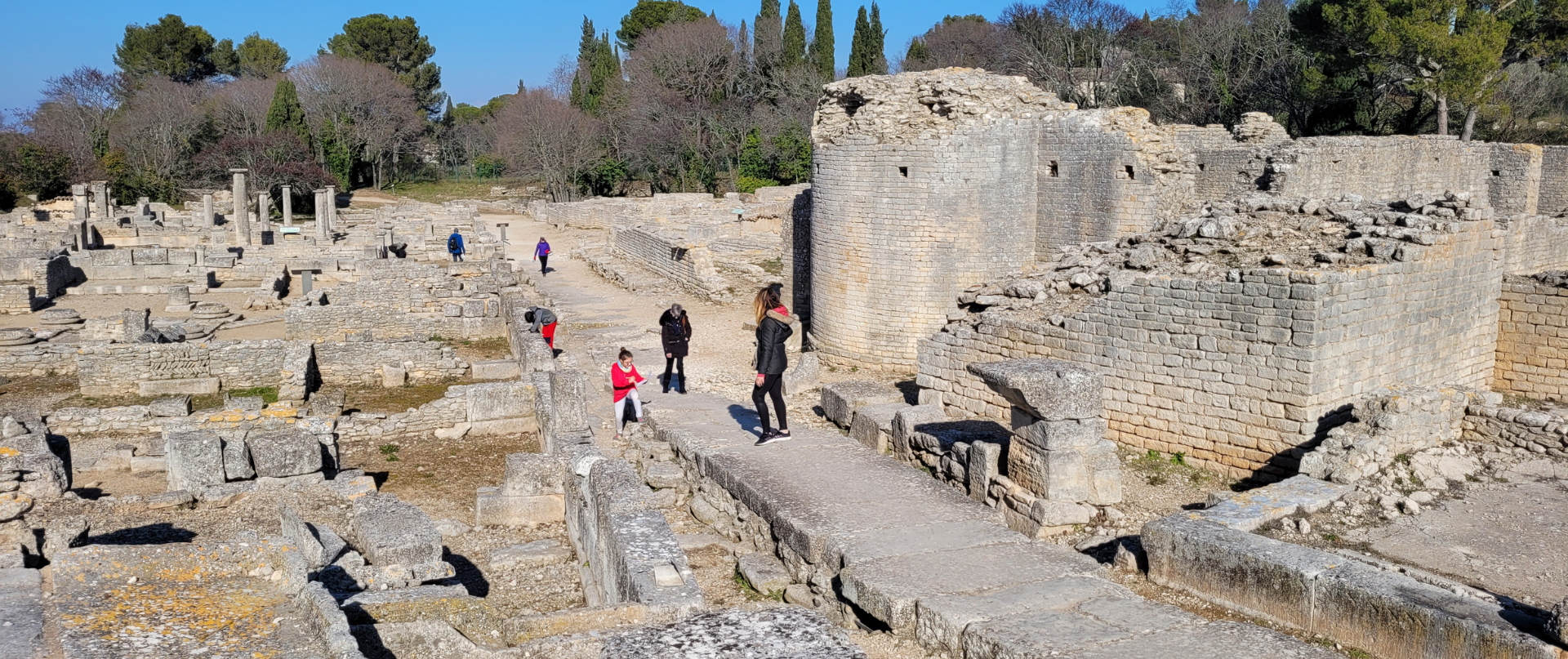
At the foot of the Alpilles, the archaeological site of Glanum at Saint-Rémy-de-Provence contains important religious and civic monuments and presents a fine example of urban development. A Gaulish oppidum built around a sacred spring stretches out before your eyes, revealing Greek and subsequent Roman influences.
Visiting the archaeological site of Glanum
• The most important site in Gallia Narbonensis. The visit starts in the residential area including a marketplace, the house with antae with its pilasters decorated with Corinthian capitals, and the thermal baths. The monumental centre has a forum, a curia and a basilica (court). The sacred spring area has revealed a temple and two shrines. The museum of the Hôtel de Sade in Saint-Rémy has a collection of sculptures and everyday objects on display which were discovered during digs at the site.
Understanding the archaeological site of Glanum
• Roman remains. For a long time an arch and a mausoleum, known as the ‘Antiques', were the only visible remains at Glanum, and from the 16th century they were visited by learned men and travellers.
• An original civilisation. From 1921 on, archaeologists unearthed traces of an original civilisation in its heyday (2nd century BC). Around the sacred spring, thought to have healing properties, the Glanics, a Celto-Ligurian Salluvian people, built a Hellenistic town that was influenced by its contacts with Massalia, the Greek city that is now Marseille.


Download PDF file
French
English
Espanol
Italian
German
Dutch
Japanese
abo_rss